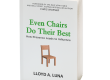
Based on the material provided, the originality of “Even Chairs Do Their Best” stems from its unconventional central metaphor: “The Chair Philosophy also knows as No-Choice Philosophy.” While most motivational books focus on expanding choices and freedom, Lloyd Luna argues that “Your problem is that you have too many exits”.
Below is an assessment of the book’s original concepts and core arguments:
1. The Core Innovation: “The Chair Philosophy”
The book’s primary original thesis is that humans often fail because they have the freedom to quit, whereas a chair “succeeds” because it has no choice but to fulfill its purpose.
- The No-Choice Mandate: Luna introduces the idea of “removing the exits” to achieve influence.
- The “Human Clicker” Origin: He uses his own humble beginning as a “human clicker” (manually advancing PowerPoint slides) as a case study for how reliability in a minor role builds a foundation for global influence.
- Functional vs. Emotional: It shifts the focus from “finding oneself” to “fulfilling a function,” suggesting that humans should adopt the “spine of a chair” once a path is chosen.
2. Theoretical Frameworks
Luna introduces several proprietary tools and concepts to explain human presence:
- The Presence Currency: He argues that attention is an earned asset that does not depreciate, behaving more like a currency than a personality trait.
- Rhythmic Human Connection: An original take on networking that emphasizes matching the “timing” and “rhythm” of a conversation rather than seeking similarities.
- The Borrowed Seat Principle: A philosophical approach to leadership stewardship, positing that influence is a temporary “lease” granted by others.
3. The Presence Profile™
The book includes a diagnostic tool that categorizes professional and personal behaviors into 10 furniture-based archetypes each one under the Power Pillar, Comfort Pillar, Utility Pillar, Social Pillar, and Support Pillar:
| Archetype | Persona | Core Contribution |
| 1. The Throne 👑 | The Decisive Anchor | Provides order, structure, and finality when things are uncertain. |
| 2. The High Chair 🔭 | The Strategic Observer | Offers foresight; identifies future trends before they reach the ground level. |
| 3. The Beanbag 🟤 | The Empathetic Sanctuary | Acts as a safe space for others to release burdens without fear of judgment. |
| 4. The Recliner 🛋️ | The Insightful Philosopher | Prioritizes deep reflection and wisdom over impulsive reactions. |
| 5. The Stool 🪵 | The Reliable Workhorse | Leads through consistent, silent action and immense productivity. |
| 6. The Dentist’s Chair🦷 | The High-Stakes Specialist | Commands technical precision and excellence in high-pressure situations. |
| 7. The Swivel Chair🌀 | The Energetic Catalyst | Drives momentum and keeps the team adaptable and moving forward. |
| 8. The Park Bench 🌳 | The Communal Bridge | Fosters a sense of belonging and connects different types of people. |
| 9. The Rocking Chair🤎 | The Steady Presence | Provides a reassuring, rhythmic influence to soothe collective anxiety. |
| 10. The Folding Chair🪑 | The Ready Responder | Offers immediate, situational support exactly where and when it is needed. |
4. Tone and Cultural Context
The originality is also reflected in its “wit and vulnerability”. Luna blends:
- Self-Deprecation: He shares “receipts of presence” through his failures, such as arriving for a speaking engagement exactly one month early.
- Tagalog-English (Taglish) Narratives: The writing incorporates local Philippine context and phrasing (e.g., Pambansang Inspirasyon, balimbing) to make global leadership principles accessible to a Filipino audience.
Summary of Originality:
The book is highly original in its rejection of “safety” and “comfort.” It posits that having too many options leads to invisibility, and that true influence is born from the “friction” of occupying space—much like a chair that eventually becomes a “Seat of Power”.